ChaFind

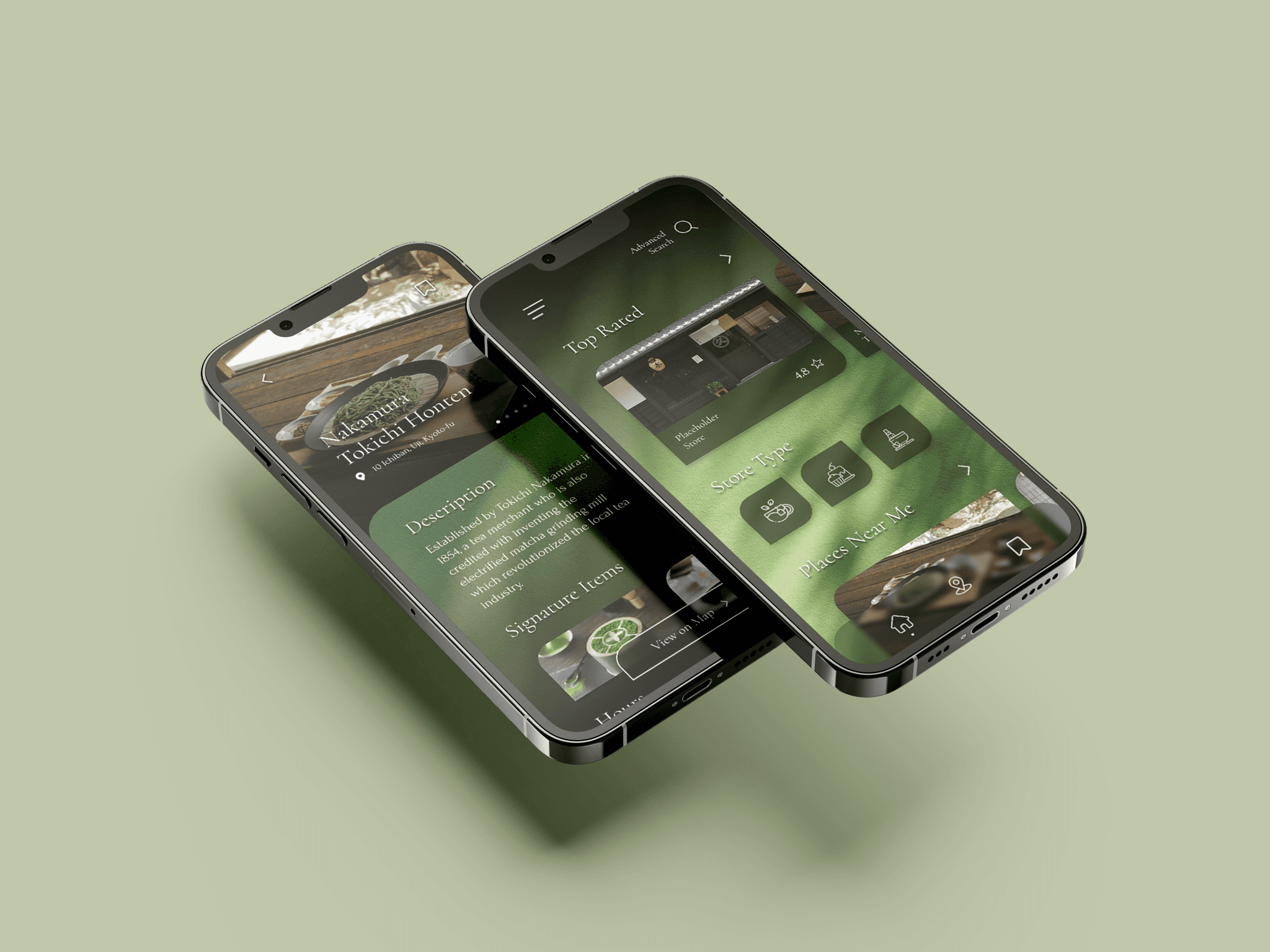
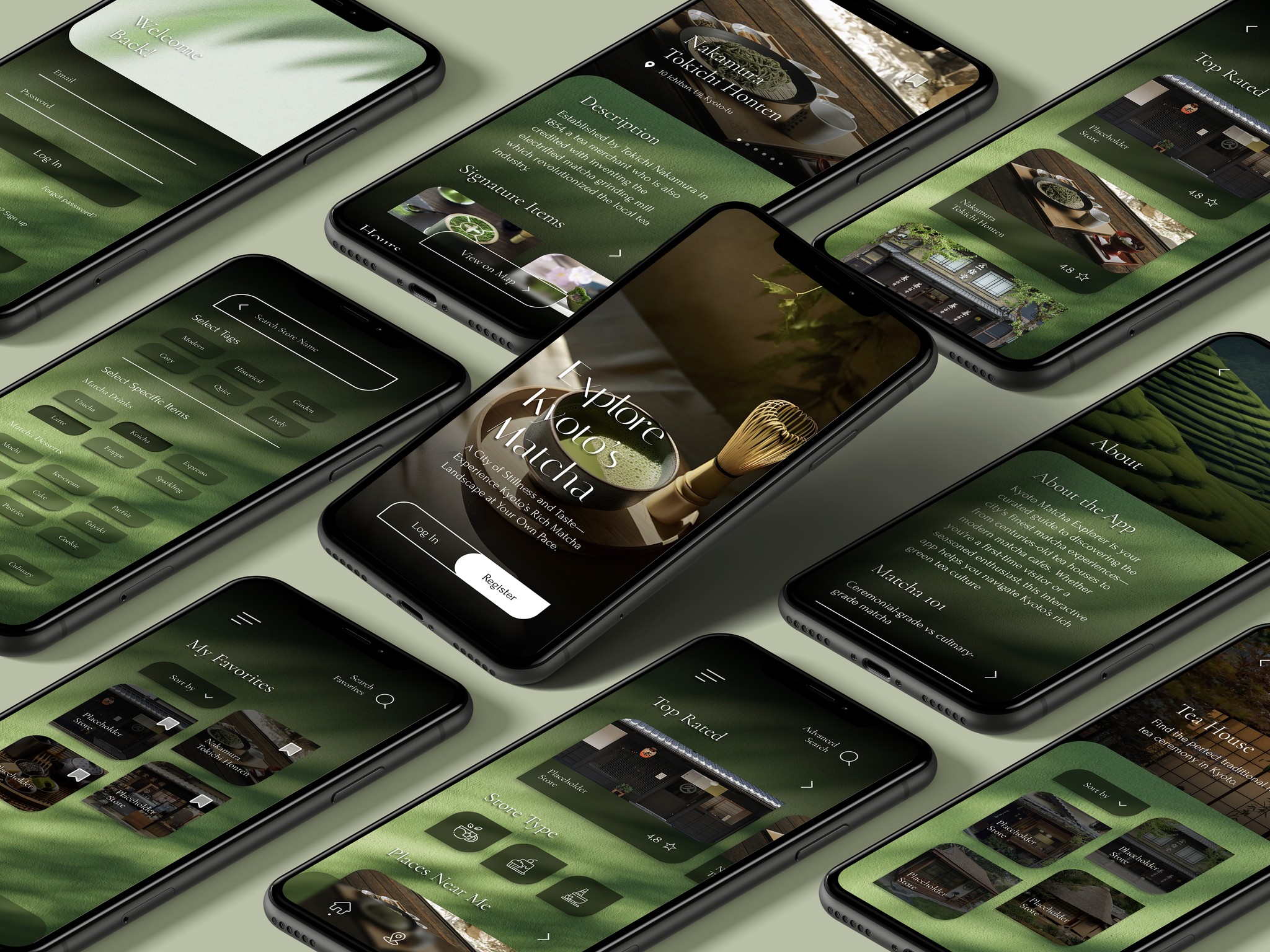
ChaFind is a mobile app concept that guides users through Kyoto’s rich matcha culture using curated locations, interactive mapping tools, and educational content. Designed as part of a location-based service project, the app blends cultural storytelling with functional wayfinding, offering users a thoughtful, visually engaging way to explore historic tea houses, modern matcha cafés, and ceremonial traditions.

Apr 22, 2025

INSTRUCTOR

Kate Edgar Owen

INSTRUCTOR

Kate Edgar Owen

INSTRUCTOR

Kate Edgar Owen

Skills

Figma, User Research, Wireframing, Prototyping, Usability Testing

Skills

Figma, User Research, Wireframing, Prototyping, Usability Testing

Skills

Figma, User Research, Wireframing, Prototyping, Usability Testing

Team

Gioia Wang

Team

Gioia Wang

Team

Gioia Wang

Purple Flower
Purple Flower
Purple Flower

Project Goal

Project Goal

Project Goal

This project aimed to make matcha culture approachable for first-time visitors while revealing the deeper traditions, aesthetics, and craftsmanship behind Kyoto’s matcha culture.

This project was developed for a course exploring location-based mobile experiences. Students were tasked with inventing an app that guides users through a chosen site using a unique lens. The directive emphasized conceptual framing, narrative structure, and design systems for mobile UI.

While many travel apps present Kyoto through temples and tourist routes, I wanted to focus on a single cultural thread—matcha—to provide a curated, sensory, and historically grounded lens through which users could experience the city.

This project aimed to make matcha culture approachable for first-time visitors while revealing the deeper traditions, aesthetics, and craftsmanship behind Kyoto’s matcha culture.

This project was developed for a course exploring location-based mobile experiences. Students were tasked with inventing an app that guides users through a chosen site using a unique lens. The directive emphasized conceptual framing, narrative structure, and design systems for mobile UI.

While many travel apps present Kyoto through temples and tourist routes, I wanted to focus on a single cultural thread—matcha—to provide a curated, sensory, and historically grounded lens through which users could experience the city.

This project aimed to make matcha culture approachable for first-time visitors while revealing the deeper traditions, aesthetics, and craftsmanship behind Kyoto’s matcha culture.

This project was developed for a course exploring location-based mobile experiences. Students were tasked with inventing an app that guides users through a chosen site using a unique lens. The directive emphasized conceptual framing, narrative structure, and design systems for mobile UI.

While many travel apps present Kyoto through temples and tourist routes, I wanted to focus on a single cultural thread—matcha—to provide a curated, sensory, and historically grounded lens through which users could experience the city.

Design Solution

Design Solution

Design Solution

Inspired by Japanese tea ceremony minimalism and natural textures, the design centers around a calm, visually cohesive experience that organizes Kyoto’s matcha world into four accessible modes of exploration: an interactive map, detailed profiles, user preference-based filter function, and educational content on history and etiquette.

This experience not only directs users to noteworthy tea houses and cafés but also allows both tourists and locals to explore the city with more intentionality, intuitive navigation, cultural awareness, and personal connection.

Inspired by Japanese tea ceremony minimalism and natural textures, the design centers around a calm, visually cohesive experience that organizes Kyoto’s matcha world into four accessible modes of exploration: an interactive map, detailed profiles, user preference-based filter function, and educational content on history and etiquette.

This experience not only directs users to noteworthy tea houses and cafés but also allows both tourists and locals to explore the city with more intentionality, intuitive navigation, cultural awareness, and personal connection.

Inspired by Japanese tea ceremony minimalism and natural textures, the design centers around a calm, visually cohesive experience that organizes Kyoto’s matcha world into four accessible modes of exploration: an interactive map, detailed profiles, user preference-based filter function, and educational content on history and etiquette.

This experience not only directs users to noteworthy tea houses and cafés but also allows both tourists and locals to explore the city with more intentionality, intuitive navigation, cultural awareness, and personal connection.